Planting
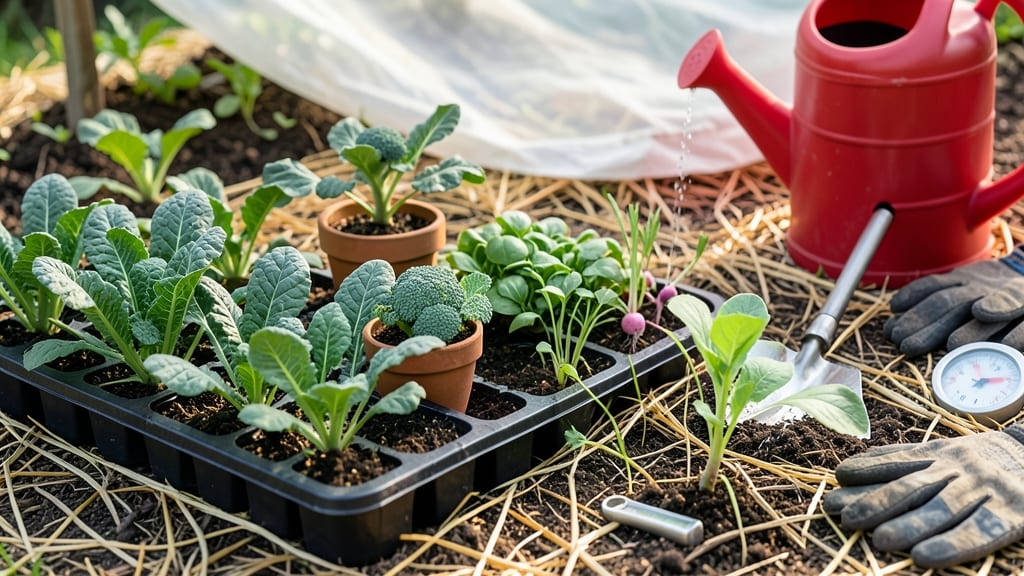
To plant a fall garden in South Texas, start between mid-August and early October—when daytime highs dip below 95°F and nights cool to 75°F or lower.
South Texas gardeners know the heat never truly lets up—but with the right timing and crops, you can still grow a thriving fall garden that beats the frost.
The key is planting heat-tolerant varieties like sweet potatoes, Malabar spinach, and collards 6-8 weeks before your first frost, which in Zone 9a-10a typically hits around December 1.
Why does timing matter so much? Because planting too early means wilting vines, while waiting too long risks a shortened harvest window before the first freeze.
I’ll walk you through the exact dates for your region, plus how to stretch your garden’s season with simple frost protection tricks that actually work in our humid climate.
You’ll also discover the top 10 crops that thrive in South Texas’s warm winters, from classic greens to unexpected heat-lovers like cowpeas and turnips. Let’s turn your late-season garden into a productive powerhouse before the cold sets in.
South Texas fall planting calendar: exact dates for heat-tolerant crops before frost
South Texas gardeners face a unique challenge: the heat lingers longer than in most regions, but first frost dates still arrive by December. The key to success lies in planting heat-tolerant crops at precise intervals to maximize yield before temperatures drop.
Unlike northern climates, your fall garden can thrive well into November with the right timing and crop selection.
To plan effectively, first determine your local first frost date. In South Texas (zones 8a-9b), this typically falls between November 15 and December 15, but microclimates near the coast may delay frost until January.
For exact dates, check the National Weather Service or use a frost date calculator like the one from the Texas A&M AgriLife Extension.
| Crop | Planting Window | Days to Harvest | Sun Needs | Notes |
|---|---|---|---|---|
| Sweet Potatoes | August 15 - September 15 | 90-120 days | Full sun | Plant slips after soil temps drop below 85°F |
| Collard Greens | August 1 - October 15 | 50-70 days | Full sun | Tolerates light frosts; harvest young leaves |
| Turnips | September 1 - October 10 | 30-50 days | Full sun | Direct sow after soil temps fall below 80°F |
| Okra | June 15 - August 15 | 50-60 days | Full sun | Extends season; harvest pods before frost |
| Kale | September 1 - October 15 | 45-60 days | Full sun | Sweeter after light frost; cold-hardy |
| Cowpeas | July 1 - September 1 | 60-90 days | Full sun | Drought-tolerant; harvest pods before frost |
For heat-tolerant crops like sweet potatoes and okra, start planting as early as mid-August to give them time to establish roots before temperatures drop. These crops thrive in warm soil and can handle brief heatwaves, making them ideal for extending your growing season.
Aim to plant 6-8 weeks before your average first frost date to ensure a full harvest.
Leafy greens like collards and kale can be planted later, even as late as mid-October, because they tolerate cooler temperatures and even light frosts. These crops actually sweeten up after a frost, making them perfect for a late-season harvest.
Direct sow seeds into well-draining soil with a balanced fertilizer (10-10-10) to encourage strong growth.
To calculate your personalized frost date, use this simple formula: Subtract 15 days from your average first frost date for Zone 9a (December 15) or 30 days for Zone 8a (November 15).
This gives you a safe planting window for frost-sensitive crops. For example, if your frost date is December 1, plant heat-loving crops by October 15 and cool-season crops by November 1.
Soil temperature plays a critical role in fall planting success. Use a soil thermometer to ensure it’s below 85°F before planting seeds or transplants. Cool soil speeds up germination and reduces stress on young plants. In South Texas, soil temperatures naturally drop in September, making
Best heat-tolerant fall vegetables for South Texas gardens (and how to extend their season)
South Texas gardeners know the fall season brings cooler temps—but the real challenge is beating the heat long enough to grow a productive garden. The key is choosing heat-tolerant varieties that thrive in 85-95°F soil while still producing before frost.
My top picks include Malabar spinach, cowpeas, and sweet potatoes, which handle the heat better than traditional fall crops.
These 10 heat-tolerant vegetables extend your harvest window by 4-6 weeks past what most gardeners attempt. The trick? Planting late July to early September and using companion planting to maximize space and reduce stress. For example, pairing okra with basil deters pests while improving flavor—both love the heat!
⚠️ PROS-CONS BOX: WHEN TO PLANT YOUR SOUTH TEXAS FALL GARDEN
🌱 PROS OF EARLY PLANTING (July-August)
- ✅ Longer harvest window (up to 12 weeks)
- ✅ Heat-hardened plants resist early frost better
- ✅ Better yield for warm-season crops
❌ CONS OF EARLY PLANTING
- ❌ Higher water needs (3-5x more than fall)
- ❌ Pest pressure (aphids, squash bugs)
- ❌ Risk of bolting in heat-sensitive greens
🌿 PROS OF LATE PLANTING (September-October)
- ✅ Lower water demands (cooler temps = less evaporation)
- ✅ Fewer pests (harvest before bug season peaks)
- ✅ Easier soil prep (less compaction from rain)
❌ CONS OF LATE PLANTING
- ❌ Shorter harvest window (6-8 weeks max)
- ❌ Limited crop choices (only heat-tolerant varieties work)
- ❌ Higher frost risk if planted too late
My top 3 risk-reward picks for extending your season are Malabar spinach (a heat-loving alternative to regular spinach), cowpeas (drought-resistant and nitrogen-fixing), and black-eyed peas (tolerate 95°F+ soil).
These outperform traditional fall crops like lettuce in South Texas’s Zone 9a-10a climate. For example, Malabar spinach stays productive until December if planted in August.
To maximize yield, use companion planting strategies like pairing okra with thyme (repels pests) or sweet potatoes with bush beans (beans fix nitrogen for the potatoes). My go-to combo is cowpeas + collards—the cowpeas thrive in heat while the collards benefit from their shade as temps drop.
This dual-purpose setup gives you two harvests from one bed!
For late-season planting (after September 15), focus on fast-maturing varieties like 'Early Scarlet' radishes (30 days to harvest) or 'Red Malabar' spinach (45 days). These heat-tolerant greens can handle 85°F+ soil while still producing before frost.
Just mulch heavily with straw or grass clippings to retain moisture and cool roots.
Don’t forget succession planting! In South Texas, you can sow every 2 weeks from August to October for a continuous harvest of bush beans or turnips.
For instance, planting 50 bush bean seeds every 14 days ensures you always have fresh pods—even when temps dip into the 60s°F. This staggered approach beats the frost by keeping plants at different growth stages.
If you’re pushing the envelope, try overwintering kale or mustard greens with row covers. These cold-hardy greens can survive 25°F with protection, giving you winter harvests in Zone 9a. Just plant in late September and cover with floating row fabric when temps