
Tools
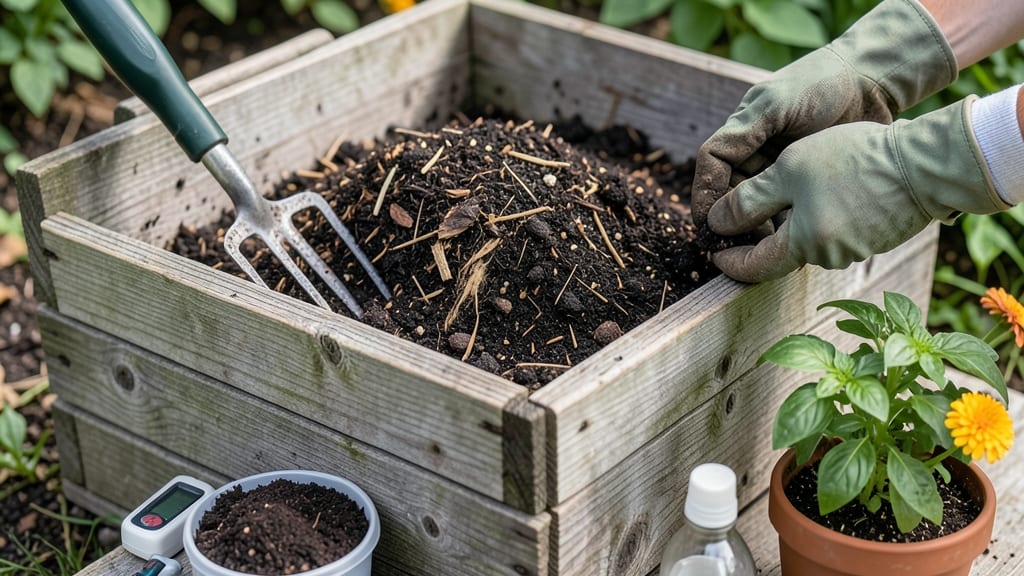
Garden compost is decomposed organic matter from plant sources like grass clippings, fruit peels, and leaves, transforming into a dark, crumbly soil enhancer that boosts plant health while preventing harsh chemical burns.
This nutrient powerhouse works through natural decomposition, where microbes break down organic materials into rich humus. Unlike manure, which can contain animal waste and risk burning plants, garden compost relies solely on plant-based ingredients. 🌱 The result?
A balanced soil amendment packed with essential nutrients like nitrogen, phosphorus, and potassium, perfect for everything from vegetable gardens to potted herbs.
For best results, mix compost into garden beds at a 25-30% ratio with existing soil—too much can lead to fungal issues or nutrient overload. I’ve found that applying it in early spring or fall gives plants a steady nutrient boost without overwhelming their root systems.
💡 In This Article
- How Garden Compost Forms and Its Nutrient Breakdown
- Best Practices for Using Compost in Gardens and Containers
How garden compost forms and its nutrient breakdown
Garden compost forms through a natural process called aerobic decomposition, where oxygen-loving microbes—like bacteria and fungi—break down organic matter. This process generates heat (up to 140-160°F) and produces a dark, crumbly material rich in humus.
The key difference from anaerobic decomposition (which occurs without oxygen and creates foul-smelling sludge) is the presence of air, which speeds up the breakdown and prevents harmful gases like methane. 🔥
The magic happens when you balance greens (nitrogen-rich materials like grass clippings, fruit peels, and coffee grounds) with browns (carbon-rich materials like dry leaves, straw, and shredded newspaper).
A good ratio is roughly 3 parts browns to 1 part greens—this ensures microbes have enough energy (carbon) to break down nitrogen efficiently. Without this balance, compost can become either too acidic (from excess greens) or too slow to decompose (from too many browns).
Nutrient-wise, mature compost typically contains 0.5-1.5% nitrogen, 0.2-0.5% phosphorus, and 0.1-0.5% potassium, along with trace minerals like calcium and magnesium. Unlike manure, which can have high ammonia levels and risk burning plants, compost has a neutral to slightly acidic pH (6.0-7.5) and a gentle, slow-release nutrient profile.
This makes it safer for seedlings and sensitive plants like tomatoes or peppers.
Microbially, compost teems with beneficial organisms—up to 1 billion bacteria per gram—that improve soil structure and suppress harmful pathogens. These microbes also help plants access nutrients more efficiently by breaking down complex organic matter into plant-available forms.
For example, fungi in compost create tiny channels in the soil, improving water and air movement, while bacteria fix nitrogen from the air into forms plants can use. 💫
One critical difference from manure is the absence of weed seeds and pathogens. While manure can introduce unwanted contaminants, compost is pasteurized through proper decomposition, making it a cleaner choice for organic gardening.
The texture of finished compost is often described as "earthy" with a slightly sweet aroma—nothing like the pungent smell of fresh manure.
To test if your compost is ready, look for a dark, crumbly texture with no recognizable food scraps. It should smell earthy, not rotten. If it still has large chunks or smells sour, it needs more time or better aeration.
Properly aged compost can improve soil moisture retention by up to 50% while reducing the need for synthetic fertilizers. 🌱